
Aeration & Dethatching in Sioux Falls, SD
Water, air and fertilizer can't reach roots through compacted soil and a mat of thatch. These two services fix that — and most lawns around here need one or both.
Why Lawns Around Here Struggle
You can water and fertilize a lawn all season and still watch it thin out. Usually that's not a lack of care — it's that nothing you're putting down is actually reaching the roots.
Two things cause that. Soil in the Sioux Falls area runs heavy on clay, which compacts hard under foot traffic, mowers and freeze-thaw cycles. And cool-season grasses build up a layer of thatch — dead stems and roots knitted together at the soil surface — that sheds water like a roof once it gets thick enough.
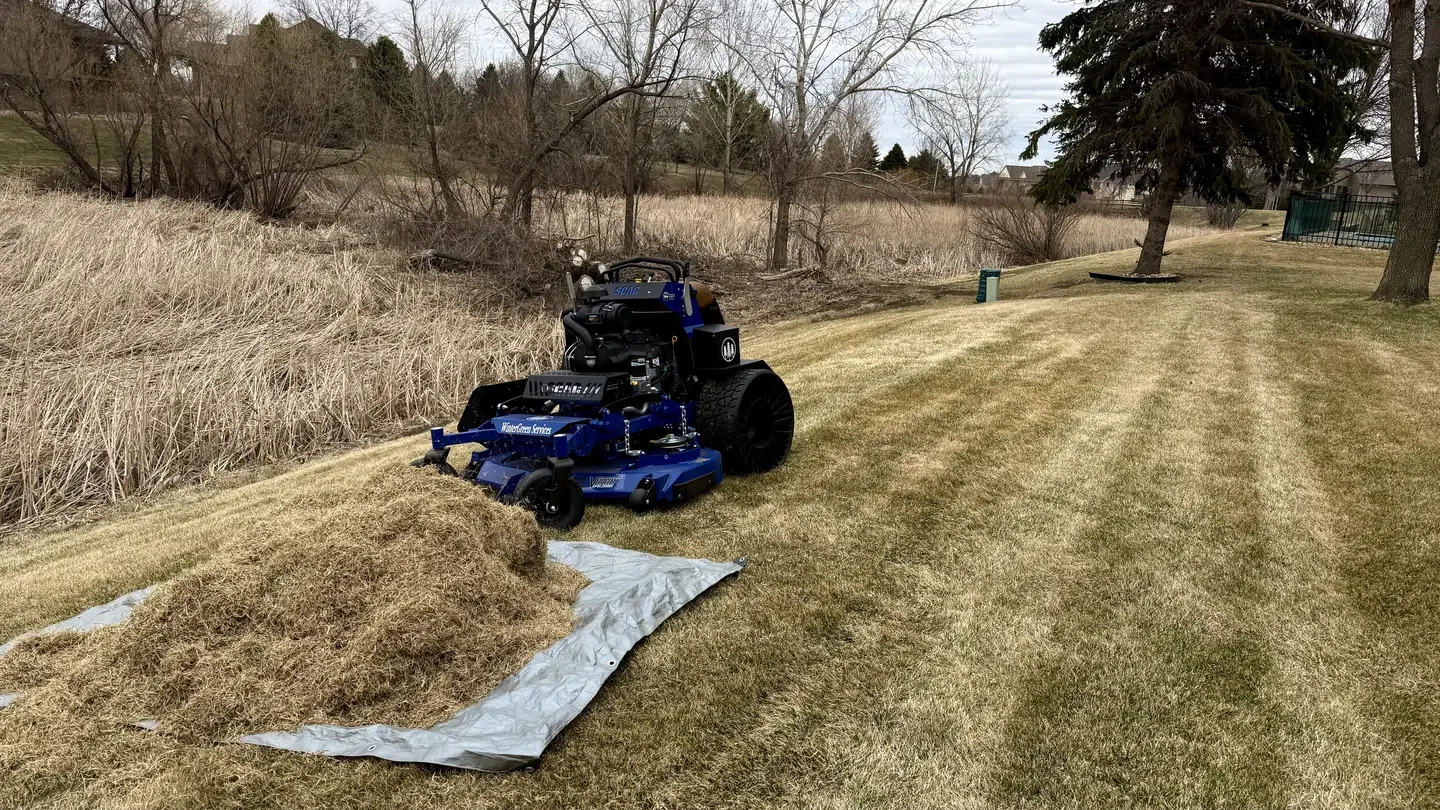
That pile in the photo above came off a single lawn. Everything under it had been starved for a while.
What Each One Actually Does
Core Aeration
Pulls small plugs of soil out of the lawn, leaving open channels through the compacted layer.
Those channels let water, oxygen and nutrients reach the root zone instead of running off the surface. Roots grow into the openings and the lawn thickens from below.
Best for: heavy clay, high-traffic yards, lawns where water pools or runs off.
Dethatching
Rakes out the dense mat of dead material sitting between the green grass and the soil.
A thin thatch layer is normal and even helpful. Once it passes roughly half an inch, it blocks water, harbors disease, and keeps new growth from rooting properly.
Best for: spongy lawns, thin patchy growth, water that beads on the surface.
Signs Your Lawn Needs One or Both
Water Runs Off or Pools
You water thoroughly and it sheets across the surface or sits on top instead of soaking in.
The Lawn Feels Spongy
Walking on it feels springy or bouncy underfoot — that's a thick thatch layer, not healthy turf.
Thin or Patchy Growth
Bare spots that never fill in, or grass that stays thin no matter how much you fertilize.
Hard, Compacted Ground
A screwdriver won't push into the soil easily. Common in high-traffic areas and clay-heavy yards.
When to Schedule in South Dakota
Timing matters more with these services than with mowing. Both put temporary stress on a lawn, so they need to happen when grass is actively growing and can recover quickly — not in the heat of midsummer or once growth has stopped for the year.
| Service | Best window | Also workable |
|---|---|---|
| Core aeration | Early fall | Spring, once the ground has thawed and dried |
| Dethatching | Early spring | Early fall |
If you're not sure which your lawn needs or when, tell us what you're seeing and we'll give you a straight answer — including if the answer is that it doesn't need either one this year.
What You're Aiming For
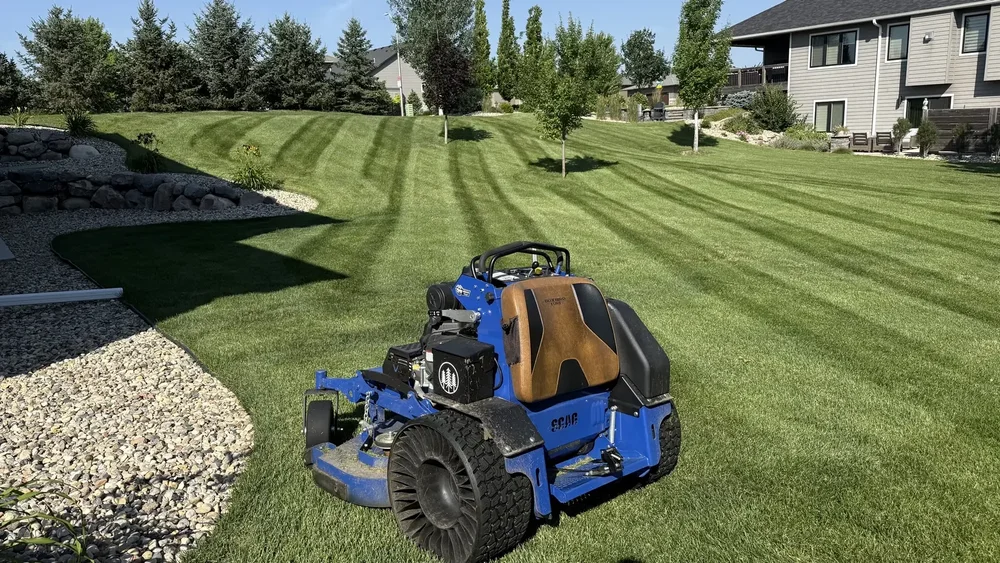
A lawn that takes water instead of shedding it, roots deep enough to handle a dry August, and fills in on its own instead of needing patching every spring.
Aeration and dethatching aren't services you notice the week they're done. You notice them the following season, when the lawn holds up through the parts of summer that used to thin it out.
Get a Free Quote- Sioux Falls
- Harrisburg
- Tea
- Brandon
- Surrounding Areas
Aeration & Dethatching FAQ
What is dethatching?
Thatch is a layer of dead stems and roots that builds up between the green grass and the soil. Dethatching mechanically rakes that layer out. A thin layer is healthy, but once it passes about half an inch it blocks water and air from reaching the roots.
What is core aeration?
Core aeration pulls small plugs of soil out of the lawn, creating channels through the compacted layer. Water, oxygen and nutrients can then reach the root zone, and roots grow into the openings to thicken the turf.
How do I know which one my lawn needs?
Spongy feel underfoot usually means thatch. Hard ground where a screwdriver won't push in easily usually means compaction. Plenty of lawns have both. Tell us what you're seeing and we'll tell you straight, including if neither is needed this year.
When should this be done in South Dakota?
For the cool-season lawns common here, early fall is the best window for aeration and early spring is best for dethatching. Both need the grass actively growing so it recovers quickly, which rules out midsummer heat and late-season dormancy.
Can you do both at the same time?
They can be done in the same season, though not usually in the same visit. Doing both at once puts real stress on a lawn. We'll recommend an order and spacing based on what your lawn can handle.
Will it damage my lawn?
Both look rough for a week or two afterward — that's normal and expected. Done in the right season with the grass actively growing, the lawn recovers quickly and comes back thicker. Done in the wrong season, it can set a lawn back, which is why timing matters.
How often should this be done?
Most lawns benefit from aeration every year or two, more often with heavy clay or high foot traffic. Dethatching is needed less frequently — only when the thatch layer has actually built up past the useful point.
Do you haul away the thatch?
Yes. Thatch is raked up and hauled off. With aeration, the soil plugs are left on the lawn to break down naturally over a couple of weeks, which returns that soil to the turf.
Are you insured?
Yes, WinterGreen Services is fully insured for all lawn care work.
Related Services
Aeration and dethatching set a lawn up to respond. Regular lawn mowing at the right height keeps it that way, and fall cleanup stops leaves from smothering turf over winter — a common cause of thin spring growth.
Managing a business property? See commercial lawn care, or browse all our services. You can also read what our customers say.
Not Sure What Your Lawn Needs?
Tell us what you're seeing and we'll give you an honest answer. Free quote, no obligation.